

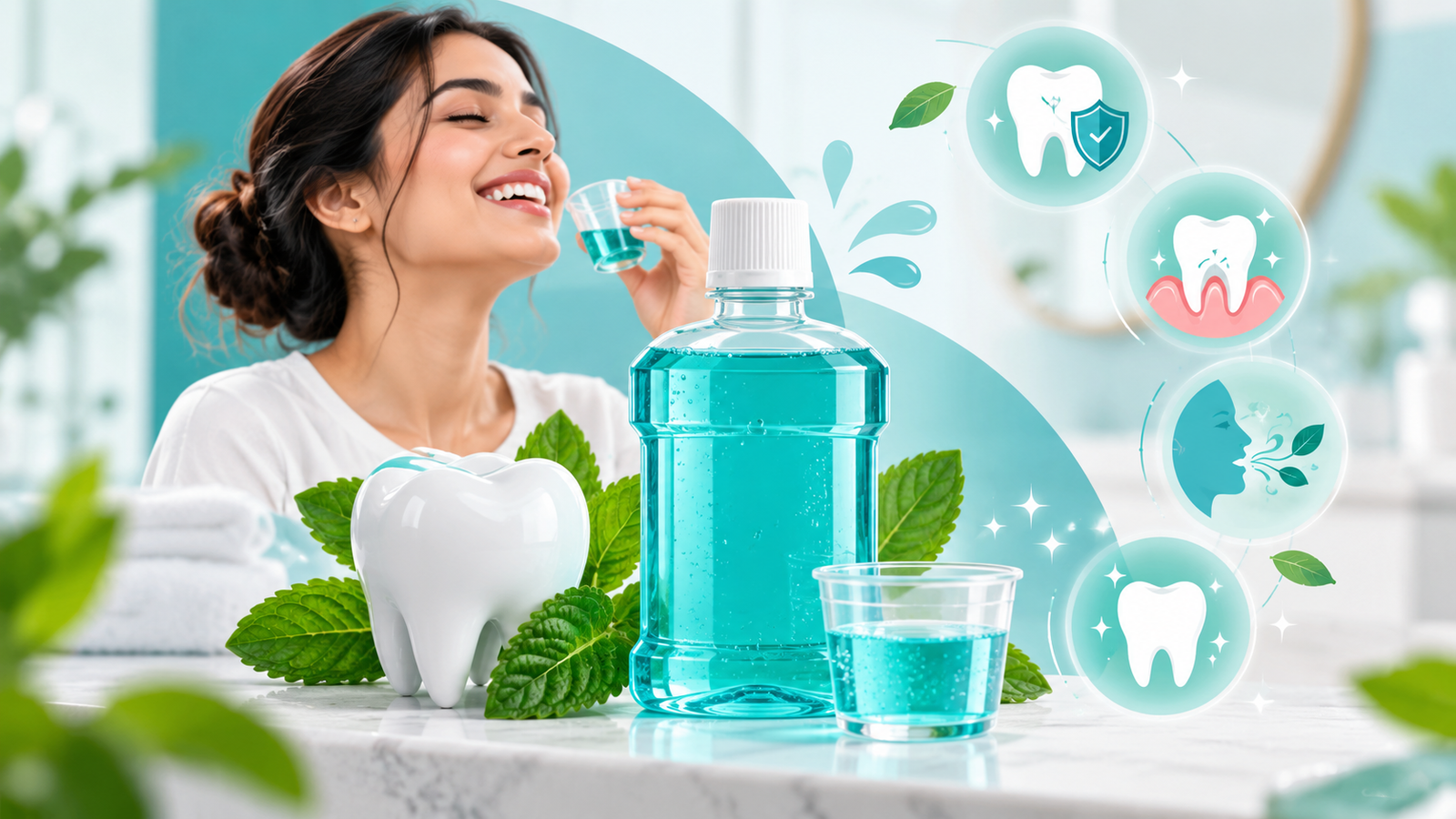
Mouthwash: Types, Uses and Common Questions
Dantam Clinics
October 10, 2026
Choosing a mouthwash may seem daunting if every bottle boasts of differing benefits. Some products simply freshen breath, others offer protection against decay, and some medicated varieties help treat a painful condition. The choice depends on what you hope to achieve.
A tasty or intense sensation does not guarantee an effective solution for your teeth and gums. Becoming aware of the ingredients, instructions and limitations can help you make a smarter selection.
What Does an Oral Rinse Do?
There are two types of oral rinse: cosmetic and therapeutic. Cosmetic varieties offer temporary breath freshening, while therapeutic products contain an active ingredient that targets a particular concern.
Although rinsing can be a valuable addition to cleaning, it does not replace brushing with a fluoride toothpaste and interdental cleaning.
Types of Oral Rinse
Cosmetic Rinses
Fluoride Rinses
Antiseptic Rinses
Alcohol Free Products
Medicated Rinses
Betadine Gargle, Uses and Precautions
Betadine gargle contains the antiseptic ingredient povidone iodine. The intended use and instructions vary depending on the product in your country. Some are concentrated solutions that must be diluted, while others are ready to use.
It is important to understand the difference between an antiseptic and a fluoride rinse. One product should not be used as an alternative to the other.
The US sore throat formulation is intended as a temporary measure for occasional sore throats, and the manufacturer advises against regular use. It also warns against using the product if you have thyroid problems, an allergy to any of the ingredients, or are pregnant or breastfeeding. Always read the warnings to check which apply to you.
Before using a gargle, check:
– The intended use and any age restrictions.
– Whether it needs to be diluted.
– The recommended frequency and length of treatment.
– That you spit out the liquid and do not swallow it.
Speak to a pharmacist or dentist if you are unsure about any of the above.
Benzydamine Oral Rinse, Treating Pain and Inflammation
Benzydamine oral rinse is a locally acting painkiller that reduces the discomfort and inflammation of mouth ulcers, sore mouths, sore throats or following a dental procedure.
It does not replace a filling, cleaning or routine examination. It is used to help manage symptoms on a short term basis.
If you have asthma or have previously experienced an allergic reaction to an anti inflammatory medicine or are pregnant or breastfeeding, you should speak to a pharmacist or dentist before use. There are differing age restrictions for rinses, sprays and lozenges, so a product designed for one will not necessarily be suitable for another.
Listerine and Other Brands, What Should You Compare?
If you have been searching for ‘listerines,’ the brand name is Listerine. Rather than choosing from results for “listerines” alone, compare the ingredients and instructions on individual products. Begin with considering what matters most to you: cavity prevention, a burst of freshness or a recommendation from your dentist for a specific concern.
Review:
– The active ingredients and intended benefits.
– Whether the product contains fluoride or alcohol.
– The age restrictions and any warnings.
– The frequency and length of treatment.If in doubt, bring the bottle or a clear photo of the label with you to your appointment. This enables your dentist to see the exact product that you are using.
Oral Rinses Compared at a Glance
Can a Rinse Treat a Cavity in the Mouth?
A search for “cavity in mouth” may reflect concern about whether rinsing can help avoid a filling. Decay can begin at an early stage when minerals are lost from the enamel before a hole develops. At this point, appropriate fluoride care and prevention can help. If damage has progressed to the point of creating a physical cavity, a rinse cannot replace the missing structure. A dentist must evaluate the situation and recommend a filling, if required.
Do not wait until you are in severe pain to arrange an assessment. Early decay may not be accompanied by any symptoms, but more advanced decay can be uncomfortable or lead to infection.
How to Use an Oral Rinse Correctly
Follow the instructions on the specific product pack. Do not assume that all products have the same measurements or length of contact.
1. Measure the recommended amount of solution.
2. Dilute if instructed.
3. Swish or gargle for the recommended length of time.
4. Spit out the liquid.
5. Check whether there are any restrictions regarding eating and drinking.
6. Follow the recommended frequency and length of treatment.
As a general rule, for a fluoride rinse, use it at a different time from brushing with a fluoride toothpaste. Rinsing straight after brushing removes the concentrated fluoride from the toothpaste. NHS guidance also recommends avoiding food and drink for 30 minutes after using a fluoride rinse. Always follow any tailored instructions from your dentist.
Common Mistakes to Avoid
An oral rinse should be used with a particular intention. Avoid:
– Using it as a substitute for brushing or interdental cleaning.
– Selecting it based on flavour or advertising.
– Assuming that a stronger sensation is a sign of greater protection.
– Combining medicated products without advice.
– Continuing a treatment beyond the recommended length of time.
– Masking symptoms repeatedly rather than arranging an examination.
If chlorhexidine causes peeling of the tissues in your mouth, stop using it and advise your dentist or pharmacist. Persistent irritation, staining or altered taste should also be mentioned to a pharmacist or dentist.
When Should You Visit a Dentist?
Arrange an assessment for persistent bad breath, gum bleeding, tooth sensitivity or pain. Mention when these began and if a particular product has helped or worsened your symptoms. If a suspected hole has led you to search for “cavity in mouth,” arrange a dental assessment rather than trying different rinses.
Toothache accompanied by a swollen face or fever can be a sign of infection and should be treated urgently. Difficulty breathing or swallowing requires immediate emergency attention.
A rinse may be a component of your care plan, but it should not prevent you from receiving prompt treatment.
Why Choose Dantam Dental Clinics?
Dantam Dental Clinics provides routine dental examinations, cleaning and prevention care, plus restorative and other Dental treatments. This enables an opportunity to assess your symptoms and choose a suitable routine. During your consultation, you should mention any relevant medical history or products that you are currently using. Ask whether your concern requires prevention, short term symptom control or treatment of a broader concern.
Helpful questions include:
– Would a rinse benefit me?
– Which ingredients are best for me?
– How long should I use this?
– Should I adjust the timing in relation to brushing?
– When should I return if the symptoms persist?
Book a consultation at Dantam Dental Clinics for advice on choosing a Mouthwash and caring for your teeth and gums.
Frequently Asked Questions
Do I need an oral rinse every day?
Can Betadine gargle be used as a daily rinse?
What is benzydamine oral rinse used for?
Are all Listerine products the same?
Can rinsing repair a cavity?
SUBSCRIBE
SUBSCRIBE TO OUR NEWSLETTER
How to Protect Your Teeth from Acidic Foods
Mouthwash: Types, Uses and Common Questions